Yarn Weight Guide: From Lace to Jumbo Explained
Learn all 8 yarn weight categories — lace through jumbo — including typical yardage, gauge, best projects, and how weight affects your yarn calculator results.
Yarn Weight Guide: From Lace to Jumbo Explained
Yarn weight is the single most important factor when planning a project. It determines how fast you'll knit or crochet, how many yards you'll need, which needle or hook to use, and how the finished fabric will feel. The Craft Yarn Council's 0-7 weight system is the standard in the US — and knowing it makes every other aspect of planning easier.
This guide covers all eight weight categories, what they're best for, and how to use them accurately in the yarn calculator.
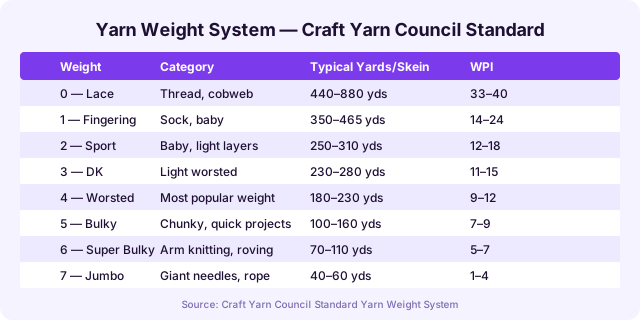
Yarn weight system chart showing all eight categories from lace to jumbo with WPI ranges and typical yardage per skein
Weight 0 — Lace
Lace weight yarn is spider-web fine, typically 33–40 wraps per inch (WPI). Standard skeins hold 400–880 yards — sometimes over 1,000 for hand-dyed artisan yarns. The recommended needle is US 000-1 (1.5-2.25 mm).
Lace is used for delicate shawls, light wraps, and fine doilies. The open structure of lace patterns offsets the high yardage that fine yarn would otherwise require. A 60-inch lace shawl might only need 800 yards total.
One caveat: lace is not beginner-friendly. The thin strand is hard to see under low light, and dropped stitches can be difficult to pick up. If you're new to yarn crafts, start with sport or DK.
Weight 1 — Fingering
Fingering weight (also called sock weight) is the most popular choice for hand-knit socks. Standard skeins are 400–465 yards. Gauge is typically 7–8 stitches per inch on US 1-3 needles (2.25-3.25 mm).
Beyond socks, fingering is excellent for baby items — it's fine enough to be soft and delicate but holds structure better than lace. Many hand-dyed yarns come in fingering weight because the high yardage means long color repeats that show up beautifully in the finished fabric.
Crochet in fingering weight is less common but produces incredibly fine amigurumi with tiny details. Check out our beginner fiber guide for fingering yarn recommendations.
Weight 2 — Sport
Sport weight sits between fingering and DK. It's sometimes called "baby weight" because it's popular for infant garments. Standard skeins are 250–310 yards, and gauge is typically 5.5–6 stitches per inch on US 3-5 needles.
Sport is a versatile middle ground. It works for lightweight sweaters, colorful accessories, and children's items. It's underused compared to DK and worsted, which is a shame — it produces beautiful fabric with a lighter hand than DK. If you're substituting yarn and can't find the exact DK you want, sport at a tighter gauge often works.
Weight 3 — DK
DK (double knitting) is the workhorse of the knitting world outside North America, where it's more popular than worsted. Standard skeins are 230–280 yards. Gauge is typically 5.5 stitches per inch on US 5-7 needles (3.75-4.5 mm).
DK is ideal for children's wear, lightweight adult sweaters, dishcloths, and blankets where you want a lighter result than worsted. It's also popular for colorwork because the thinner strand shows stranded patterns more crisply.
In the yarn calculator, selecting DK gives you a yardage estimate about 28% higher than the same project in worsted — the finer strand covers area more slowly.
Weight 4 — Worsted
Worsted is the most popular yarn weight in North America. Standard skeins are 180–230 yards. Gauge is typically 4.5 stitches per inch on US 7-9 needles (4.5-5.5 mm).
Nearly every beginner starts with worsted. It's easy to see, easy to handle, and widely available in every fiber and color. It's fast enough for blankets, structured enough for garments, and durable enough for everyday accessories like hats and mittens.
The calculator's default yardage values are calibrated primarily around worsted weight data from Ravelry's project database. If the yarn you're planning to use is worsted, the estimates are highly reliable.
Weight 5 — Bulky
Bulky weight (sometimes called chunky) is great for fast, cozy projects. Skeins typically hold 100–160 yards. Gauge is 3.5 stitches per inch on US 9-11 needles (5.5-8 mm).
Bulky knits up fast — a hat takes an afternoon, a scarf a weekend. The fabric is dense and warm, which makes bulky ideal for winter accessories. For blankets, bulky produces a heavy, plush result that some crafters love and others find stiff.
Watch out: the low yards-per-skein means you'll need more skeins. A throw blanket in bulky might need 15–20 skeins of 140 yards each, compared to 8–9 skeins of 220-yard worsted for the same size.
Weight 6 — Super Bulky
Super bulky yarn (6–7 WPI) is popular for arm knitting and giant-needle projects. Skeins are 70–110 yards. Gauge is 2.5–3 stitches per inch on US 13-17 needles or a 10-12 mm crochet hook.
Super bulky creates extremely warm, chunky fabric. It's great for infinity scarves, thick headbands, and small throw blankets. The low yardage per skein means costs can add up — always calculate total yards before shopping. A 40-inch square super bulky blanket might need 10+ skeins at around 80 yards each.
Weight 7 — Jumbo
Jumbo is the thickest yarn weight, often sold as roving or rope yarn. Skeins hold 40–60 yards — sometimes less. You'll use jumbo for arm-knitting or very large-gauge needle knitting (US 50+), and for giant decorative projects.
Jumbo is novelty territory for most crafters. The low yardage makes it expensive for large projects. But for a statement-piece blanket, decorative wall hanging, or oversized pillow cover, it creates a dramatic, modern look.
How to Identify Yarn Weight Without a Label
Lost the label? Two methods work reliably:
- WPI (wraps per inch): Wrap the yarn around a ruler for 1 inch without stretching or compressing it. Count the strands. Compare to the weight system: 33–40 = lace, 14–24 = fingering, 12–18 = sport, 11–15 = DK, 9–12 = worsted, 7–9 = bulky, 5–7 = super bulky, 1–4 = jumbo.
- Knit a test swatch: Cast on 20 stitches on US 7 needles. If you get roughly 18–20 stitches per 4 inches, it's worsted. More stitches = thinner yarn; fewer = thicker.
Once you've identified the weight, enter it in the yarn calculator along with your project dimensions to get your yardage estimate. You can also read our yarn substitution guide for help when switching weights mid-project.
Summary: Quick Reference
| Weight | Category | Typical Yards/Skein | Gauge (sts/4 in) |
|---|---|---|---|
| 0 | Lace | 440–880 | 32+ |
| 1 | Fingering | 350–465 | 28 |
| 2 | Sport | 250–310 | 24 |
| 3 | DK | 230–280 | 22 |
| 4 | Worsted | 180–230 | 18 |
| 5 | Bulky | 100–160 | 14 |
| 6 | Super Bulky | 70–110 | 10 |
| 7 | Jumbo | 40–60 | 6 |
Use these numbers as benchmarks. Your actual gauge will vary based on needle size, tension, and fiber. When in doubt, swatch — and use the knitting and crochet yarn estimator to make sure you have enough before you buy.